Why Choosing a Certified E-Waste Recycler Matters for Your Business

Why Choosing a Certified E-Waste Recycler Matters for Your Business

In today’s technology-driven business environment, companies regularly update their IT infrastructure to remain competitive. However, this ongoing cycle of technological upgrades leads to a growing challenge: how to manage and dispose of obsolete electronic equipment responsibly. Improper disposal of electronic waste (e-waste) not only poses environmental risks but can also result in data breaches, regulatory fines, and reputational harm. This is why partnering with a certified e-waste recycler is essential for businesses seeking secure, compliant, and sustainable solutions.

This article explores the importance of certified e-waste recycling, the risks of uncertified practices, and how companies can benefit from selecting a trusted partner for electronic waste management.

What Is a Certified E-Waste Recycler?

A certified e-waste recycler is a company that meets recognized standards for environmental responsibility, data security, and occupational health and safety in the handling, processing, and disposal of electronic waste. These recyclers obtain certifications such as:

  • ISO 9001 – Quality Management Systems
  • ISO 14001 – Environmental Management Systems
  • ISO 45001 – Occupational Health & Safety
  • R2 (Responsible Recycling) – Global standard for responsible recycling practices
  • E-Stewards – Certification emphasizing environmental and social responsibility

Certification ensures that the recycler adheres to best practices for handling toxic materials, wiping or destroying sensitive data, and minimizing environmental impact.

The Risks of Using Uncertified Recyclers

1. Data Breaches and Cybersecurity Threats

Obsolete IT equipment often contains sensitive business, financial, and customer data. When this equipment is improperly handled or inadequately wiped, it can fall into the wrong hands. The consequences include data leaks, regulatory fines, and loss of trust.

2. Non-Compliance with Regulations

Governments and environmental authorities impose strict guidelines for e-waste disposal. Working with uncertified recyclers increases the risk of non-compliance with local or international standards, which could result in legal liabilities, penalties, or public exposure.

3. Environmental Damage

Unregulated disposal of electronics contributes to pollution, as devices contain hazardous substances such as lead, mercury, and cadmium. These materials can contaminate soil, water, and air, causing long-term damage to ecosystems.

4. Brand Reputation Damage

Sustainability is becoming a key differentiator for businesses. Failing to demonstrate responsible e-waste practices can damage your brand image, particularly with customers, partners, and investors who value environmental responsibility.

Why Certification Matters: Key Business Benefits

1. Assurance of Data Security

Certified recyclers implement stringent data destruction processes, including physical hard drive shredding, degaussing, and software-based data wiping. They issue certificates of data destruction, assuring businesses that sensitive information has been permanently removed.

2. Regulatory Compliance

Certified providers comply with all relevant environmental and data protection laws. They help businesses meet regulations such as:

  • GDPR (General Data Protection Regulation)
  • Local environmental and waste disposal laws
  • Industry-specific standards like HIPAA or PCI-DSS (when applicable)

This reduces your legal exposure and provides documentation for audits or internal reviews.

3. Environmental Responsibility

Certified e-waste recyclers follow environmentally sound practices such as:

  • Proper handling of hazardous materials
  • Maximizing material recovery and recycling
  • Reducing landfill waste
  • Minimizing greenhouse gas emissions

This aligns with corporate sustainability and ESG (Environmental, Social, Governance) goals.

4. Transparent Documentation and Reporting

A certified recycler provides detailed reports that document:

  • Chain of custody
  • Asset inventory
  • Data destruction logs
  • Recycling outcomes

These records support CSR (Corporate Social Responsibility) reporting and contribute to internal sustainability metrics.

5. Brand Differentiation

Working with a certified recycler allows companies to showcase their commitment to environmental stewardship. It builds trust with stakeholders and can be used in marketing materials, sustainability reports, and public disclosures.

Choosing the Right Certified E-Waste Recycler

When selecting a certified recycler, consider the following factors:

1. Accreditations and Certifications

Ensure the provider holds valid certifications from recognized organizations (e.g., ISO, R2, E-Stewards). Request documentation and verify the validity.

2. Service Scope

Look for recyclers that offer comprehensive IT asset disposition (ITAD) services, including:

3. Local Operations and Pickup Services

For efficiency, partner with a recycler that operates in your region and provides on-site pickup or drop-off options. This is particularly useful for multi-location businesses or companies with large volumes of devices.

4. Experience with Your Industry

Choose a provider that understands your sector’s compliance needs, whether it’s finance, healthcare, government, or education. Industry-specific experience ensures smoother processes and fewer risks.

5. Transparency and Accountability

The provider should be able to answer key questions like:

  • How is data destruction performed and verified?
  • What happens to each type of device or component?
  • How is e-waste tracked through the process?
  • What kind of reports do they provide?

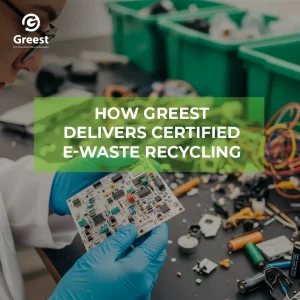
How Greest Delivers Certified E-Waste Recycling

How Greest Delivers Certified E-Waste Recycling

As a certified e-waste recycler in the MENA region and the wider MENA region, Greest offers end-to-end solutions tailored to enterprise clients. Our services include:

  • Secure Hard Drive Shredding in MENA region: On-site or off-site, with ISO-compliant processes and full documentation.
  • Certified IT Asset Disposition: We handle all aspects of ITAD, from data wiping to responsible recycling.
  • E-Waste Pickup and Logistics: Safe collection of obsolete electronics from your premises.
  • Environmental Reporting: Transparent documentation of all recycling and disposal outcomes.
  • Government-approved Practices: We meet MENA region’s Waste Management Regulatory Authority (WMRA) and Ministry of Environment standards.

Whether you operate in the MENA region, Greest is your trusted partner for secure and compliant e-waste solutions.

The risks associated with improper e-waste disposal are significant, ranging from legal issues to environmental harm and data breaches. By choosing a certified e-waste recycler, businesses protect their sensitive information, ensure compliance, and support environmental sustainability.

Certified e-waste recycling is not just a regulatory requirement—it’s a strategic advantage that can reduce costs, strengthen your brand, and support long-term ESG goals.

Looking for a certified e-waste recycler in MENA region? Greest provides secure, compliant, and environmentally responsible recycling services tailored to enterprise needs. Contact us today to schedule a consultation or learn more about our certified ITAD services.

FAQ Section

What certifications should an e-waste recycler have?

Look for certifications such as ISO 9001, ISO 14001, ISO 45001, R2, and local government approvals.

Does certified e-waste recycling include data destruction?

Yes. Certified recyclers provide secure data destruction services, including physical shredding and certificates of destruction.

What types of electronics can be recycled?

Computers, servers, hard drives, mobile devices, monitors, networking equipment, and more can be securely recycled.

How do I verify if a recycler is certified?

Ask for documentation of certifications and check with the issuing authority for validity.

Is certified e-waste recycling more expensive?

It may cost more upfront, but it protects your business from larger risks such as data breaches, fines, and reputational harm.